
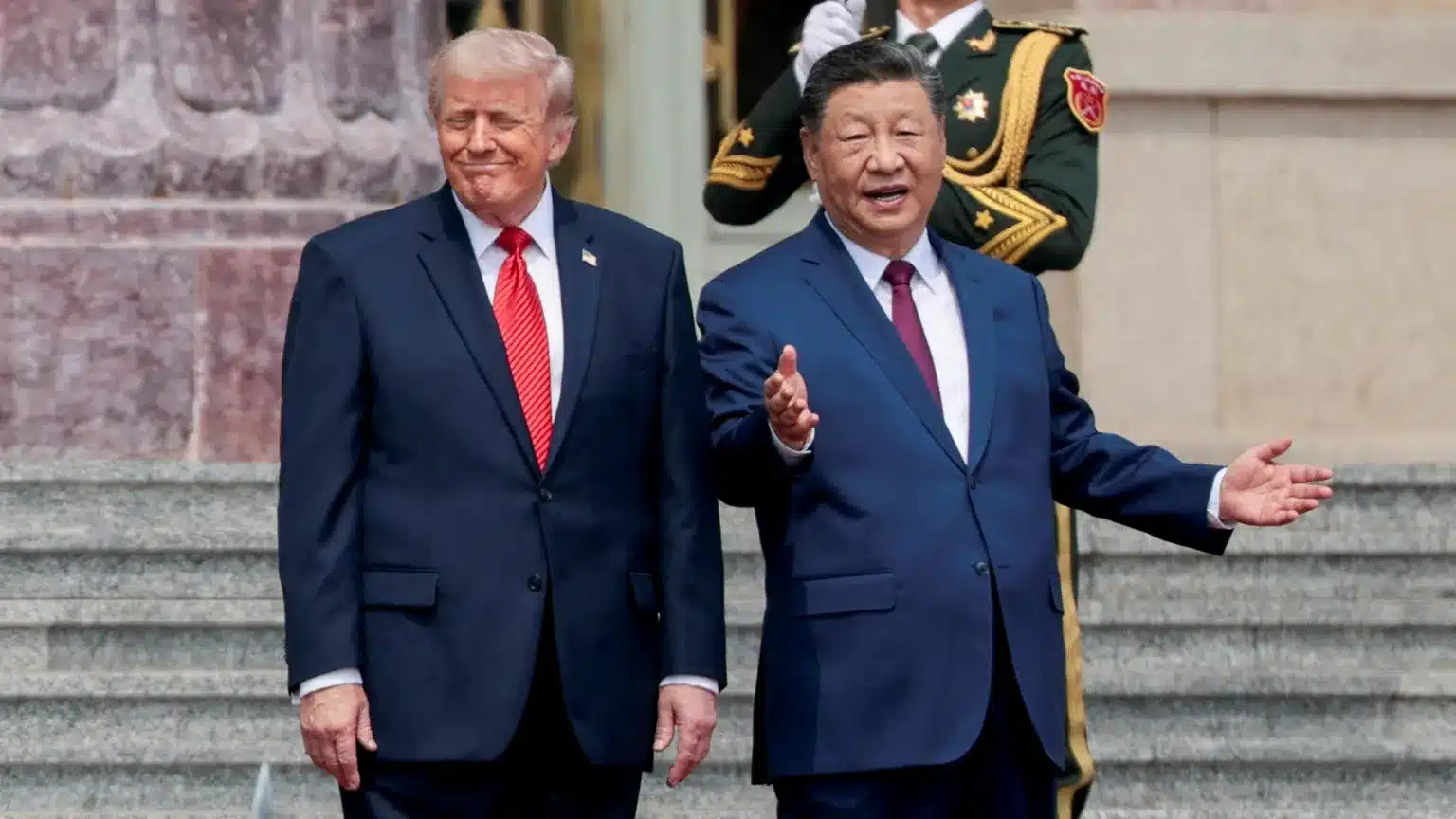
Challenging the Narrative of a 'Historic Summit'
The notion that Donald Trump's 2026 visit to Beijing, nine years after his last, constitutes a 'historic summit' capable of 'redefining geopolitical balances for the next ten years' is a significant overstatement. While diplomatic engagements between the US and China are always important, to suggest this meeting alone could 'reset' relations amidst escalating tensions over Iran and Taiwan, or unilaterally avert a global recession, fundamentally misunderstands the deep-seated structural rivalries at play. The idea of a sudden shift to a 'stabilized bipolar world' based on a single encounter is, frankly, naive.
The 'Trump 2.0' Method: Flattery or Folly?
The description of Trump's 'method'—lavishing praise on Xi Jinping, calling him a 'great leader,' and touting 'precious moments'—as a strategic 'reset' is highly debatable. This approach, while perhaps intended to open doors, often comes across as inconsistent and, at worst, undermines long-term US foreign policy goals. To suggest this marks a '180-degree turn' from his previous stance of 'making China pay' implies a level of tactical genius that often eludes the former president's diplomatic history. More accurately, it reflects a transactional approach that prioritizes immediate, superficial gains over enduring strategic imperatives.
The claim that Trump 'needs a diplomatic success as his popularity falters in Washington' is a plausible motivation, but it hardly guarantees a genuine shift in US-China dynamics. Personal political expediency rarely translates into robust, sustainable international policy.
Furthermore, while the presence of American CEOs like Elon Musk, Tim Cook, and Jensen Huang underscores economic interests, it does not automatically 'force the opening of the Chinese market.' China's economic strategy is highly sophisticated and driven by its own national interests, not merely by the presence of foreign business leaders. Beijing's use of 'pomp and circumstance' is indeed a display of stability, but this is a carefully constructed image, not necessarily a reflection of underlying willingness to compromise on core issues.
Iran, Taiwan, and the Illusion of Leverage
The assertion that 'China holds the lever on the Iranian issue' due to its status as Tehran's main trading partner is an oversimplification. While China is a significant player, Iran's foreign policy is complex and not solely dictated by Beijing. The idea that Trump 'hopes Xi will play mediator' for the Strait of Hormuz, only for Xi to condition 'any progress on Iran or trade' on US 'restraint on the Taiwan issue,' paints a picture of direct, tit-for-tat negotiation that often fails to materialize in practice. Geopolitical issues are rarely resolved with such neat transactional exchanges.
The anxiety in Taipei is certainly warranted, but the suggestion that a 'truce commerciale' or 'a boost in the Middle East' could lead Washington to 'slow down its arms sales' to Taiwan, thereby 'shifting the balance in Asia-Pacific,' is a speculative and potentially dangerous conclusion. US policy towards Taiwan, governed by the Taiwan Relations Act, is a matter of strategic stability and regional security, not a bargaining chip to be traded for economic concessions or Middle Eastern mediation. Any such move would be met with severe bipartisan opposition in the US and would dramatically destabilize the Indo-Pacific.
The Myth of a 'New World Order' from a Single Toast
The article's conclusion, particularly the notion that Xi Jinping's toast linking 'the Chinese rejuvenation dream' to 'Make America Great Again' signals a 'pragmatic common ground' or 'a phase of constructive cooperation for the next three years,' is a profound leap of faith. Diplomatic pleasantries and carefully worded toasts are not evidence of a fundamental shift in strategic rivalry. To suggest that 'the two powers realize they are too interdependent to tear each other apart without self-destruction' is an optimistic interpretation that often overlooks the historical precedents of great power competition, where interdependence has not always prevented conflict.
The question of whether Trump can 'maintain this diplomatic calm' upon returning to the US is indeed pertinent, but it underscores the fragility of any perceived 'truce.' The 'battle for global domination' is not merely changing form; it is an ongoing, multifaceted contest that will not be resolved by a single summit, no matter how much 'imperial splendor' is involved. To suggest this meeting marks an 'indispensable step to avoid a global recession and military escalation' is to imbue it with an almost magical power it simply does not possess.
Source: Trump à Pékin : Entre faste impérial et bras de fer, un duel au sommet
Articles connexes
 International Relations
Macron's African Union Address: A Dubious 'Paradigm Shift' in Franco-African Relations
 International Relations
Congo-Mauritania Diplomatic Flurry: A Critical Look at the Oyo Summit's Real Impact
 International Relations