
Macron's 'New Pact' with Africa: More of the Same?
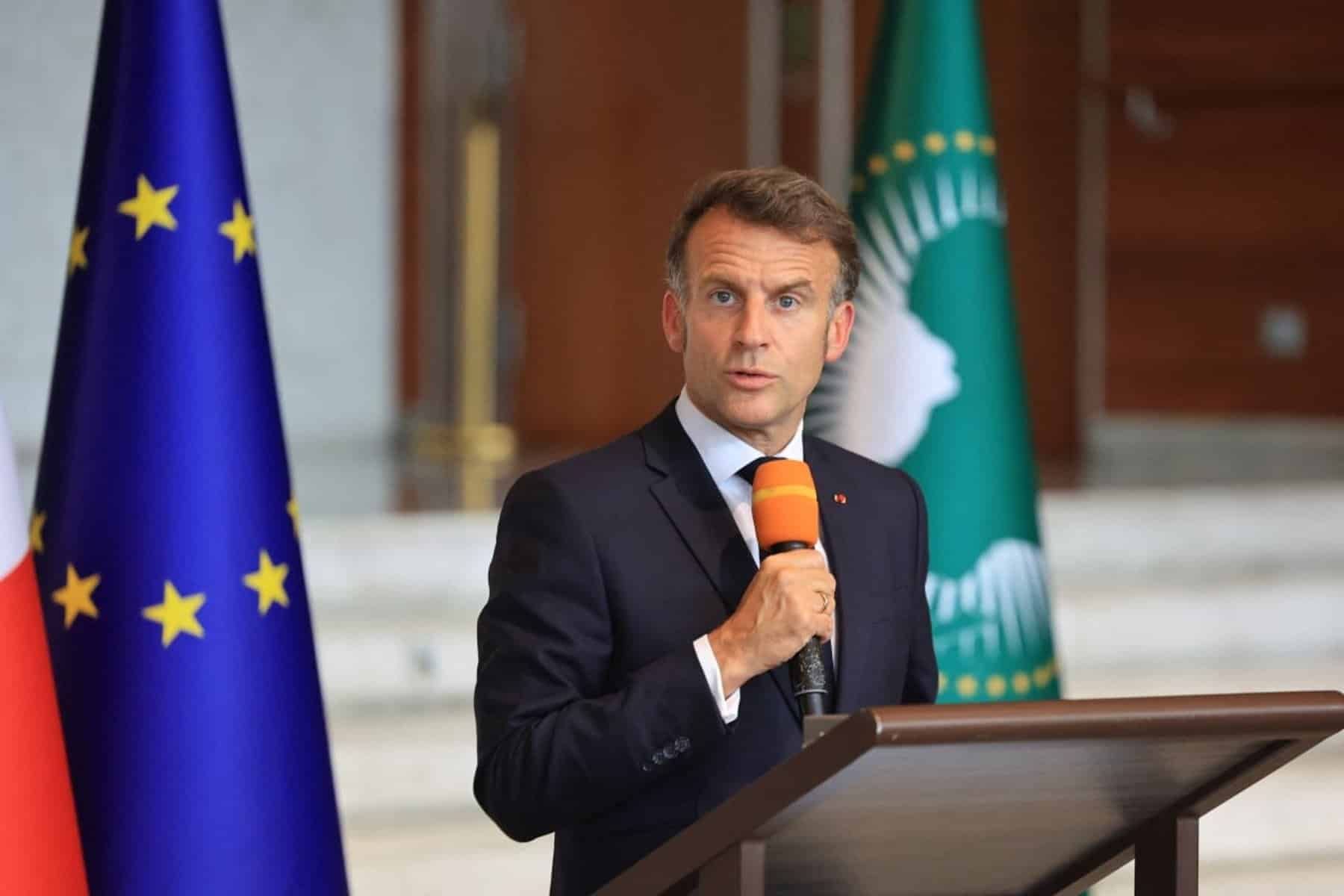
Recent reports celebrate French President Emmanuel Macron's visit to the African Union (AU) headquarters, painting it as a monumental shift in Paris's approach to African peace and security. The narrative suggests a departure from direct military intervention towards a more supportive, financially-driven role, championed by figures like Mahmoud Ali Youssouf of the AU and António Guterres of the UN. However, this purported 'grand turning point' warrants a critical examination, as it largely rehashes long-standing French foreign policy objectives under a new, more palatable guise.
The assertion that this marks 'the end of an era and the beginning of assumed African sovereignty' seems premature and overly optimistic, given the historical context of Franco-African relations.
The 'Peace Fund' Initiative: A Financial Rebranding of Influence?
Macron's pledge to prioritize AU initiatives and to organize an international conference in Paris by late 2026 to mobilize funds for the AU's Peace Fund is presented as a radical move away from interventionism. While the idea of African-led solutions for African crises is commendable, the emphasis on French coordination and the mobilization of global funds, particularly through UN Security Council Resolution 2719, raises questions about the true autonomy of these initiatives. Resolution 2719, which mandates UN member state contributions for AU-led peace missions, could be seen less as a grant of sovereignty and more as a mechanism to externalize the costs of security while maintaining a degree of oversight and influence from traditional powers.
- The AU's Peace Fund, having raised nearly $400 million in 2024, demonstrates a capacity for self-funding, yet the focus remains on external contributions.
- The proposed conference in Paris could serve to re-center French diplomatic efforts, rather than genuinely decentralize them to African institutions.
The claim that this signals the 'death of military Françafrique' and its replacement by 'financial diplomacy' is a convenient reinterpretation. French economic and political interests in Africa have always been intertwined with its security presence. Shifting from direct military presence to significant financial and logistical backing, while perhaps altering the optics, does not necessarily diminish French strategic leverage.
The UN Security Council Seat: A Long-Standing Promise, Still Unfulfilled
Macron's renewed support for a permanent African seat on the UN Security Council is another point highlighted as a significant diplomatic pivot. While France has indeed advocated for this, alongside the AU's integration into the G20, these are not new stances. The call for a more representative global governance structure with African inclusion has been a recurring theme in international discourse for years. The delay in actualizing such a seat, despite consistent French rhetoric, suggests that while the sentiment is expressed, the political will from all permanent members of the Security Council might still be lacking.
The declaration that 'Africa's problems must primarily be resolved and coordinated by Africa' is a truism that has often been undermined by external interventions, including those from France. This latest tour, spanning Egypt, Kenya, and the AU, appears to be an attempt to recalibrate France's image on the continent, particularly in light of growing anti-French sentiment and the rise of alternative partnerships.
The Illusion of Total Strategic Autonomy
The article posits a future where Africa achieves 'total strategic autonomy by 2031,' projecting a continent capable of deploying and funding its own peace forces. While this aspiration is vital, achieving it requires a deeper transformation than what a shift in French funding mechanisms can provide. True autonomy necessitates robust internal governance, economic diversification beyond resource extraction, and the ability to resist external pressures, regardless of their financial or military nature.
The emotional appeal of seeing the AU and UN flags together, symbolizing a shared hope for an Africa no longer subjected to its destiny, risks overshadowing the complex realities on the ground. The critical questions remain: Will private partners genuinely commit to the Peace Fund without seeking undue influence? And, more importantly, will African unity be strong enough to overcome internal divisions and external manipulations, even as France ostensibly steps back from direct intervention?
The battle for peace in Africa is indeed just beginning, but it requires more than a rephrasing of old policies. It demands genuine empowerment, unburdened by historical dependencies and thinly veiled neo-colonial agendas.
Source: Macron à l’Union Africaine : Le grand virage de Paris qui change tout pour la paix en Afrique
Articles connexes
 International Relations
Congo-Mauritania Diplomatic Flurry: A Critical Look at the Oyo Summit's Real Impact
 International Relations
The Illusory Reset: Trump, Xi, and the Unraveling Myth of a 'New Bipolar World'
 International Relations