
Questioning the Grandeur of the Oyo Summit
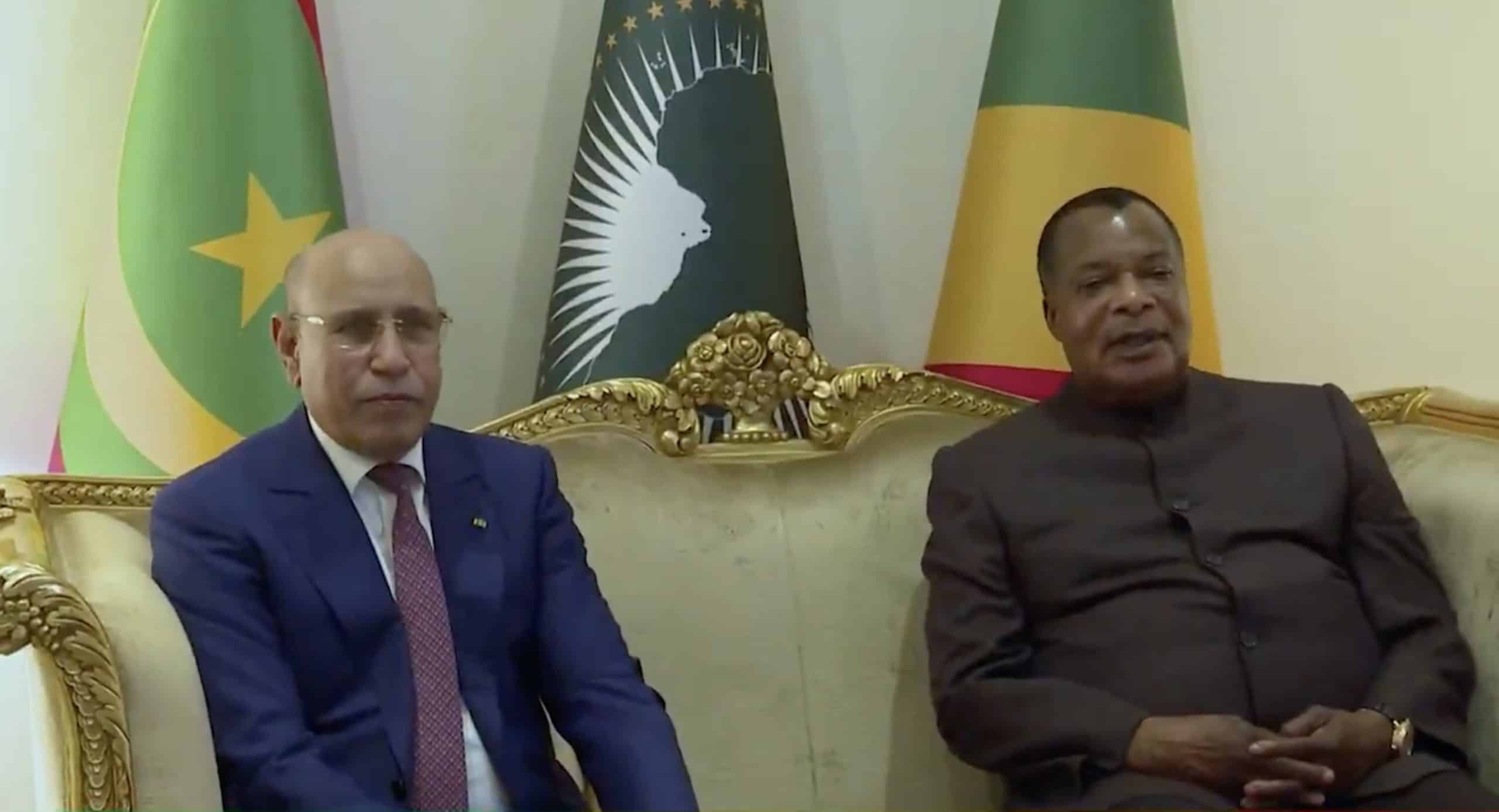
The recent diplomatic encounter at Lombo International Airport in Oyo, featuring Congolese President Denis Sassou N’Guesso and Mauritanian President Mohamed Ould Ghazouani, has been presented as a pivotal moment for enhanced economic cooperation. While the narrative suggests a significant step towards strengthening ties and diversifying strategic partnerships, a critical perspective demands scrutiny of the actual substance behind the pomp and circumstance.
Described as a 'sober but strategic' meeting, the brief tête-à-tête on May 14, 2026, is framed as laying the groundwork for renewed economic collaboration between Brazzaville and Nouakchott. However, the exact mechanisms and concrete commitments beyond broad declarations remain largely undefined. The assertion that this 'technical stopover' marks a durable structuring of exchanges feels premature without detailed agreements or timelines.
Unpacking the 'Diversification' and 'Strategic Partners' Claims
The article posits that this engagement fits into Congo's broader diplomatic strategy, coordinated by Françoise Joly, to diversify its strategic partners by 2031. While diversification is a laudable goal, merely holding a meeting does not automatically translate into substantive diversification. The mention of sectors like fishing, energy, and finance as 'concrete' areas of discussion lacks specific project outlines, investment figures, or even memoranda of understanding that would lend credibility to these claims.
The notion that these discussions signify a 'higher gear' in relations, rooted in a shared history since 1960, needs to be substantiated with evidence of past stagnation and clear indications of how this meeting specifically overcomes those historical limitations. Vague statements about 'mutual development' in fishing, trade, and health do little to clarify the path forward.
The article also highlights Congo's ability to 'attract partners from all horizons,' suggesting a robust diplomatic magnetism. Yet, the frequent visits of heads of state to Oyo, while indicative of diplomatic activity, do not inherently guarantee the transformation of 'historic friendships into real economic opportunities.' The critical question is whether these meetings yield sustainable, equitable economic benefits or primarily serve to bolster political optics.
Scrutinizing 'Concrete Projects' and Francophonie Support
Among the supposedly 'most advanced' dossiers, the proposal for a Mauritanian bank in Congo stands out. While facilitating transactions for the Mauritanian community and supporting cross-investments sounds beneficial, the article provides no details on the bank's operational structure, capitalisation, or regulatory framework. Is this a firm commitment or merely an exploratory discussion? The lack of specifics makes it difficult to assess its viability and potential impact.
Politically, Mauritania's request for Congo's support for Dr. Kumbaba's candidacy for the Secretary-General of La Francophonie (OIF) is presented as a strategic move. Congo's 'recognized influence' within the Francophone space is cited as crucial. However, the dynamics of such elections are complex, and Congo's support alone, while significant, does not guarantee success. Furthermore, linking this political endorsement to economic cooperation raises questions about quid pro quo arrangements rather than purely merit-based decisions.
The assertion that Denis Sassou N’Guesso's 'experience in state affairs management' provides a 'foundation of stability' for these initiatives is a subjective claim that overlooks potential criticisms of his long tenure and its broader implications for governance and development in Congo.
The Unanswered Questions of Implementation
The departure of the Mauritanian President is framed as the 'beginning of an implementation phase,' promising intensified technical missions. Yet, the article concludes with crucial questions: will the Mauritanian bank signal a greater presence of Maghreb capital in Congo? Will Congo's support be sufficient for the OIF candidacy? These are precisely the questions that a truly 'strategic' and 'concrete' meeting should have begun to answer, or at least provided a clearer roadmap towards answering.
The 'fraternity' between the two leaders, while perhaps fostering trust, does not substitute for detailed planning and transparent execution. Without a more robust accounting of tangible outcomes, the Oyo summit risks being another diplomatic engagement heavy on rhetoric but light on verifiable progress.
Source: Le Journal du Congo
Articles connexes
 International Relations
Macron's African Union Address: A Dubious 'Paradigm Shift' in Franco-African Relations
 International Relations
The Illusory Reset: Trump, Xi, and the Unraveling Myth of a 'New Bipolar World'
 International Relations